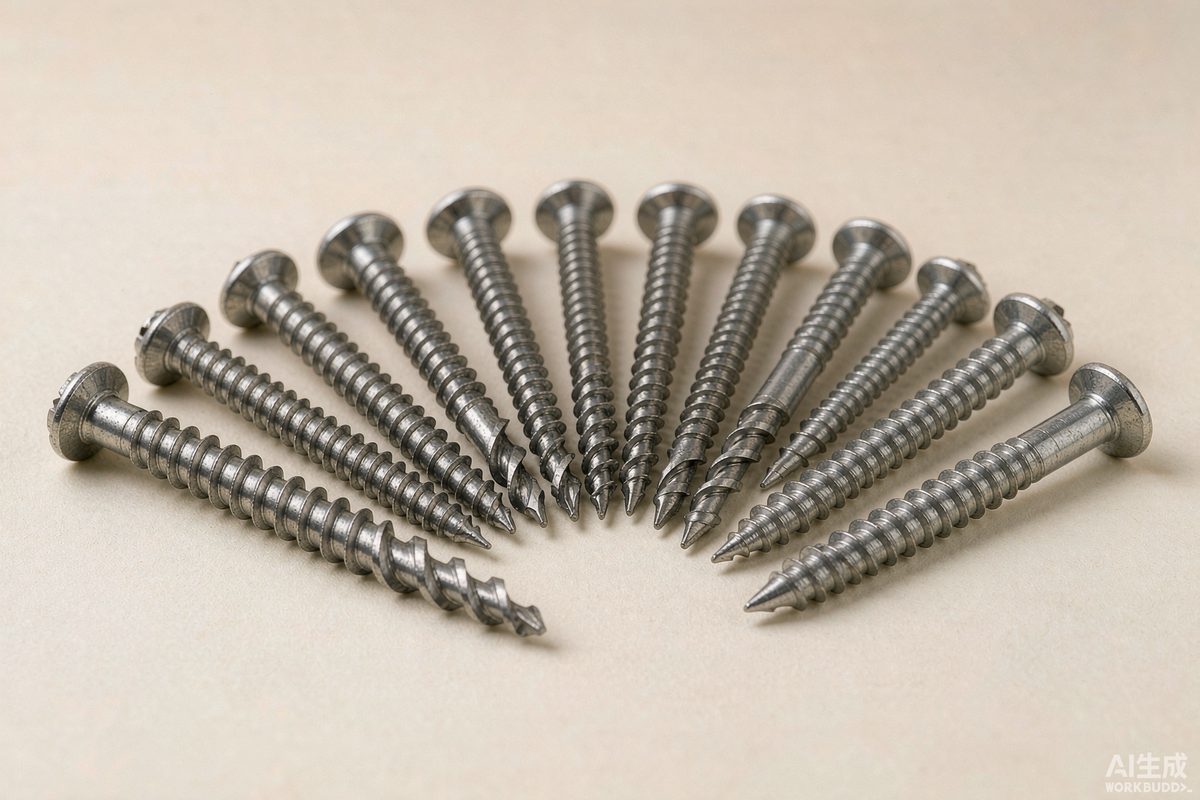
The socket head cap screw — "Allen bolt" in workshop language — is the default fastener inside machinery: compact head, high clamping force, and it can be sunk flush into a counterbore. It is also one of the most mis-specified fasteners, usually on strength grade and coating.
1. Standards and what they actually mean
| Standard | Common name | Head |
|---|---|---|
| ISO 4762 / DIN 912 / GB/T 70.1 | Socket head cap screw | Cylindrical head, hex socket |
| ISO 10642 / DIN 7991 | Countersunk socket screw | 90° countersunk head |
| ISO 7380 / DIN 7380 | Button head socket screw | Low domed head |
| GB/T 70.2 / DIN 916-type | Set screw (grub screw) | Headless, hex socket |
2. Property class: 12.9 is standard on the shelf, but not always right
| Class | Tensile strength | Hardness | Typical use |
|---|---|---|---|
| 8.8 | 800 MPa | HRC 22–32 | General machinery, light duty |
| 10.9 | 1000 MPa | HRC 32–39 | Structural joints, vibrating equipment |
| 12.9 | 1200 MPa | HRC 39–44 | Moulds, dies, hydraulic blocks, high preload in small size |
| A2-70 (304) | 700 MPa | — | Corrosive / food / outdoor |
| A4-70 (316) | 700 MPa | — | Marine, chemical, swimming pool environments |
Hydrogen embrittlement: 12.9 screws that are acid-pickled then electroplated (zinc) can crack days after assembly. If you need 12.9 with corrosion protection, specify Dacromet / mechanical zinc, or require baking (de-embrittlement) at 190–230 °C within 4 hours of plating.
3. Size range and the "shear" question
- Common metric stock: M3 to M24, lengths 6–200 mm; coarse thread is the default.
- Cap screws are designed for tension (clamping), not shear. If the joint works in shear, use a shoulder screw or a fitted bolt and state it on the drawing.
- Thread engagement: in steel, at least 1× diameter (1.5× preferred). In aluminium, 2× diameter — otherwise the thread strips before the screw reaches its strength.
4. Hex socket vs Torx vs hex lobular
Hex sockets are cheap and universal but strip at high torque and cam out on worn tools. Torx (hexalobular) drive gives better torque transmission and longer tool life — worth specifying for automated assembly or service-critical joints.
5. Indicative tightening torque (dry, friction coefficient ≈ 0.14)
| Size | 8.8 | 10.9 | 12.9 |
|---|---|---|---|
| M6 | 10 N·m | 14 N·m | 17 N·m |
| M8 | 24 N·m | 34 N·m | 41 N·m |
| M10 | 47 N·m | 67 N·m | 81 N·m |
| M12 | 81 N·m | 115 N·m | 139 N·m |
| M16 | 200 N·m | 280 N·m | 340 N·m |
| M20 | 390 N·m | 550 N·m | 660 N·m |
Reference values only. Torque is dominated by friction, not strength — lubricated threads reach the same preload at roughly 60–70 % of the dry torque, and can over-tighten to failure if you use the dry figure.
6. Where they are used
- Mould and die assemblies (12.9, black oxide)
- Machine frames, guards and fixture plates
- Pump and gearbox covers (often with threadlocker)
- Automation equipment, jigs, linear-rail mounting